Arkansas' largest electric utility, the world's leading technology company, and the state's largest newspaper are locked in a federal court dispute over who bears the cost of powering Google’s $4 billion data center in West Memphis. The outcome could significantly affect Entergy Arkansas customers across the state, including residents in parts of Baxter County. Their utility bills already reflect partial costs of a solar facility tied to the project.
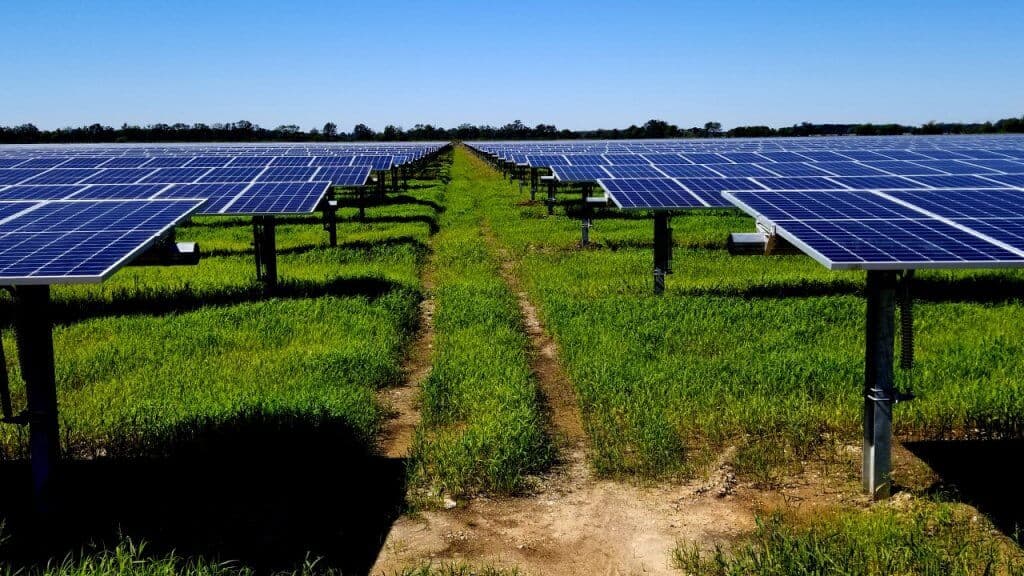
The issue came to light on August 31, when the *Arkansas Democrat-Gazette* reported that Google will pay Entergy $526 million toward the Cypress Solar facility, a $1.6 billion project in Jefferson County. The newspaper’s figures were drawn from Arkansas Public Service Commission (PSC) records obtained via an Arkansas Freedom of Information Act request by Jessica Kivell, a nurse in central Arkansas. Those records, shared with the publication, reportedly contradicted public claims by Entergy and Google that Google’s payments would fully cover the plant’s cost.
In response, Entergy filed an 18-page verified complaint in federal court later that day. The utility sought a temporary restraining order to prevent the *Arkansas Democrat-Gazette*, its reporter Sydney Sasser, the *Arkansas Times*, editor Byron Tate, and Kivell from publishing additional details from the PSC documents. Entergy also requested that the court order the defendants to destroy copies of the records, take down already-published stories, and disclose anyone with whom they shared the information.
Entergy based its legal argument on federal and state trade secret laws, stating that the records included proprietary pricing information that could harm its competitive position. The utility contended that the PSC released the records due to an administrative oversight, breaching its temporary protective order. However, the filing did not address First Amendment protections or the potential concerns over prior restraint.
Federal Judge Lee Rudofsky heard the matter within hours. The hearing lasted nearly four hours, including closed-door sessions where the judge reviewed the contested records and heard testimony from Kivell and David Palmer, Entergy’s vice president of regulatory affairs. Rudofsky expressed skepticism about granting the request, emphasizing the significant constitutional hurdles. According to media reports, Rudofsky stated, “It would take a lot to get me to do a prior restraint.”
On September 6, the judge declined to grant Entergy’s restraining order, citing concerns over the First Amendment but not ruling on whether the records qualified as trade secrets. He noted that Kivell had acted lawfully by requesting and sharing public documents. The decision to deny the order cannot be appealed, but the case is ongoing as parties prepare further arguments on a possible preliminary injunction.
The broader legal implications have drawn attention from press freedom advocacy groups, who have criticized Entergy's actions as an attack on journalistic independence. Legal precedent in cases like *Near v. Minnesota* (1931) and *New York Times Co. v. United States* (1971) has strongly limited the ability of courts to restrain publication of lawfully obtained information. Under a similar ruling in *Florida Star v. B.J.F.* (1989), the U.S. Supreme Court held that truthful reporting based on public records cannot be penalized, even if the government inadvertently released those records.
Meanwhile, the conflict extends to the project’s financial underpinnings. Entergy claims Google’s payments, including $443 million in accelerated contributions and $83 million annually over a 20-year term, will ultimately total $2.1 billion. These payments, the utility argues, will result in $1.1 billion in net benefits to other Arkansas customers by reducing overall system costs. Google has echoed these claims. However, the *Democrat-Gazette* has stood by its reporting, stating the $526 million figure was derived directly from PSC records and suggesting Entergy’s explanations came only after the lawsuit’s setback.
The timing of regulatory filings and rate changes is also raising questions. Entergy customers began paying a $5.77 monthly increase in June to fund three generation projects, including the Cypress Solar facility, even though Google isn’t expected to draw power until February 2027. Full operation of the 600-megawatt plant is not anticipated until 2028.
The dispute adds to statewide tensions over data centers. Several Arkansas communities have enacted restrictions or moratoriums on new facilities, citing concerns about energy demand and transparency. For Entergy customers, the pending court ruling on this case will determine not only access to information but how costs linked to Google's infrastructure will be shared for decades to come.