Several families in central Arkansas face uncertainty after the end of federal rental assistance programs that previously kept them housed. These programs, administered by the now-defunct People Trust Community Loan Fund, supported families like Alexis Mitchell’s, who was recently evicted from her southwest Little Rock home.
Mitchell and her three children moved into a hotel after being forced out of their home, where they had lived since 2020. With no clear plan for permanent housing, Mitchell detailed the challenges of leaving behind belongings and facing a maze of bureaucracy in search of help. “Pretty much all of the stuff that was important but not absolutely necessary, we had to leave,” she said. Her rent had been fully covered by the U.S. Department of Housing and Urban Development (HUD) through its Continuum of Care Program until January. The National Credit Union Administration’s decision to liquidate the credit union behind the People Trust fund in April resulted in an abrupt halt to the aid.
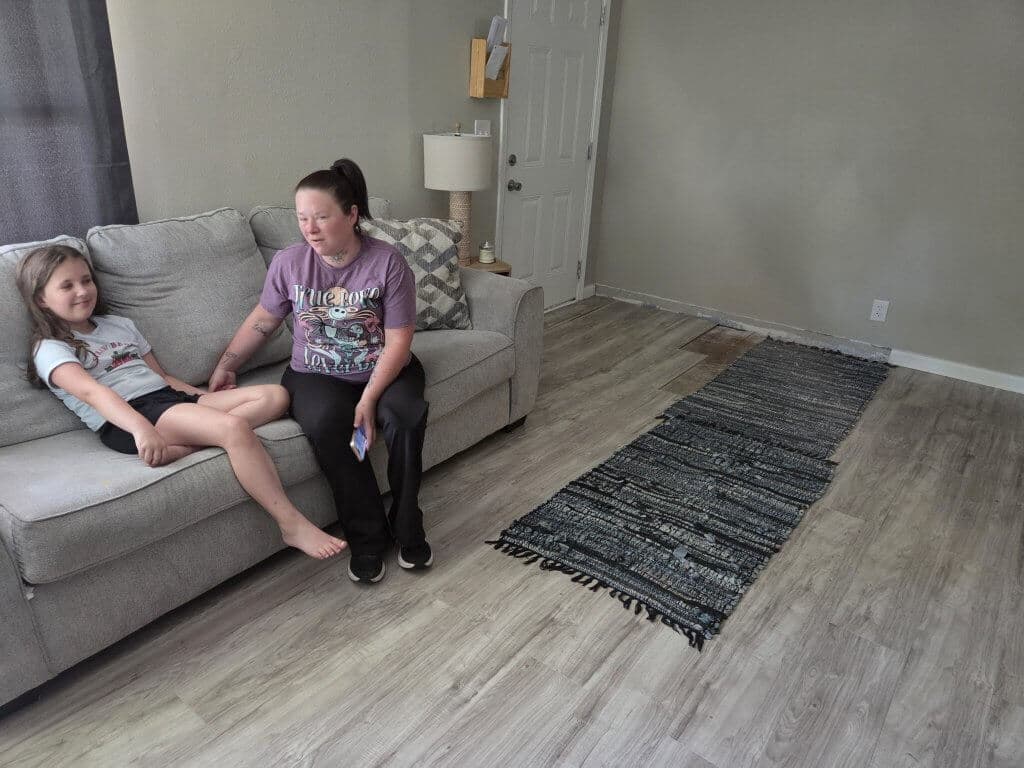
The impact of the funding void has left families like Brittany Robinson's grappling with the financial and emotional toll. Robinson, a mother of five with a prosthetic leg, moved her family to a North Little Rock home earlier this year after losing her previous subsidized housing due to unpaid rent left uncovered by the program’s collapse. Her new rental home has livability issues, including hazardous wiring, sewage spills, and loose floorboards, yet fixing these problems remains uncertain as landlords face similar payment challenges.
Robinson’s rental assistance was provided by the Community Housing Program, also overseen by People Trust. This program served individuals with disabilities or chronic illnesses, significantly lowering their monthly rent obligations. The breakdown of the program, however, has left Robinson struggling to stay afloat. “We did have a little bit of means to move the first time, but now all that money has been put into this new place, and we don’t have any money to move again,” Robinson said.
The uncertainty surrounding these rental aid programs also highlights Arkansas’ broader challenges with housing security. According to the National Low Income Housing Coalition, a quarter of Arkansas’ renting households live at or below the poverty line or earn less than 30% of the area median income, with an estimated shortfall of over 55,000 affordable rental units statewide. Between August 2025 and July 2026, landlords across the state filed more than 10,000 eviction cases, according to data from the Eviction Lab.
Mitchell sought emergency housing assistance from the City of Little Rock after learning she would be evicted, but help was stalled by administrative bottlenecks. The city attempted to collaborate with HUD to find temporary solutions but failed to reach an agreement. City spokesperson Aaron Sadler said officials allocated $300,000 to aid affected residents while seeking consensus with HUD. However, Mitchell and others continue to face imminent eviction or homelessness.
HUD is now investigating the People Trust Community Loan Fund. Meanwhile, People Trust founder Arlo Washington told other media outlets that participating in HUD programs ultimately proved challenging for the organization.
For families like Mitchell’s and Robinson’s, the stress of uncertain housing has taken a significant toll on physical and mental health. Mitchell described the strain from months of “constant calls, documentation searches, and agency referrals” as overwhelming. With eviction dates looming, neither family knows where they will go next. “The consequence of that administrative circle is that my three children and I may become homeless,” Mitchell warned city officials in recent communications.
Arkansas passed its first law requiring minimum livability standards for rental properties in 2021; however, advocates say it falls short of ensuring reliable housing conditions. For now, families displaced by the end of rental aid are left navigating layers of administrative hurdles as they seek stability in an increasingly dire housing market.