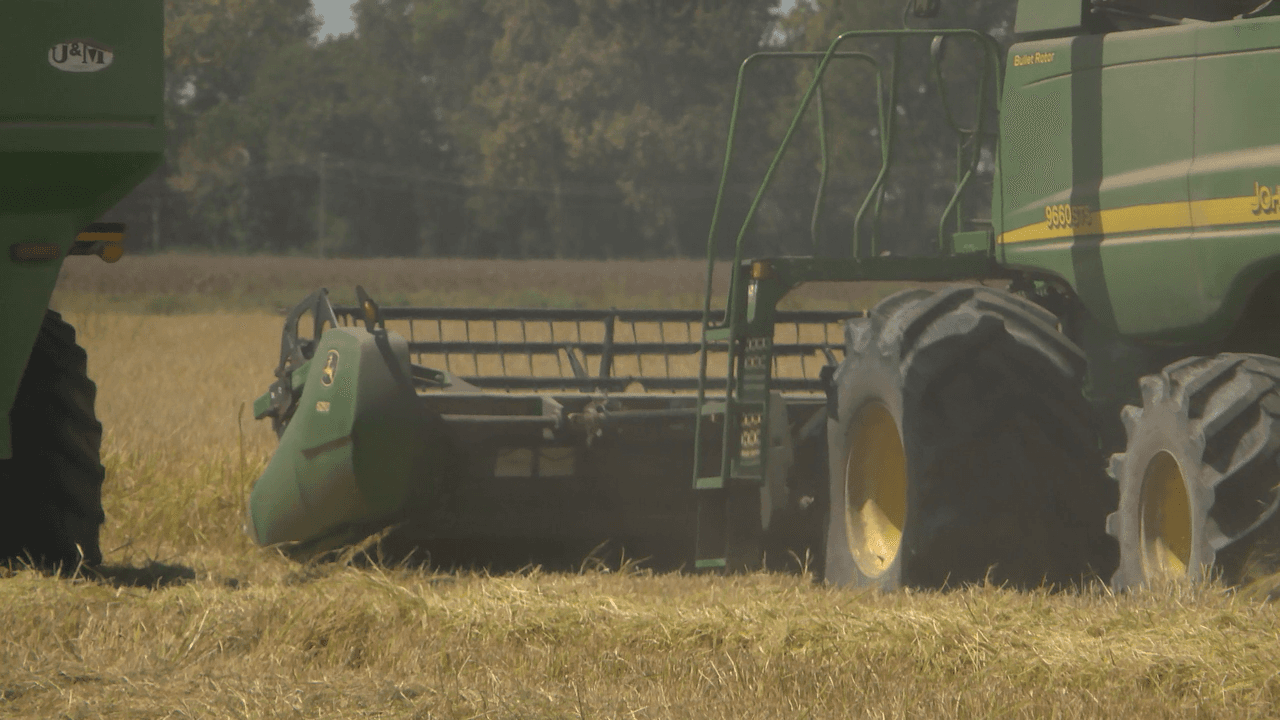
TRUMANN, Ark. — Farmers in Trumann are battling soaring temperatures during this year's rice harvest, with sweltering heat drying crops faster than usual and adding pressure to an already hectic season. Jeremiah and Jesse Walton, alongside their father, have been harvesting rice while temperatures climb into triple digits.
“Just imagine if you sit out in the field all day long in over a hundred degrees—it’s going to stress,” said Jeremiah Walton, a local farmer.
During harvest, grain trucks cycle through fields to transport rice efficiently. The trucks hold about two and a half full bins of rice and must operate quickly to keep up with the pace of the drying crops.
Michael Chaney, staff chair at the University of Arkansas Extension Center in Poinsett County, emphasized the importance of timing during harvest. “When we’re looking at quality issues to go to the mill, [farmers understand] they’ve got to get across this field and start to the next process because it’s drying so quickly in the head itself,” Chaney said.
He described the demanding harvest process as a "big dance," with combines filling up, grain trucks being loaded, and operations cycling back to the field for more—all while ensuring the rice maintains its quality. Chaney noted that the key to a successful rice crop is managing grain moisture levels. Farmers aim to harvest before the rice becomes too dry, reducing both weight and quality, or too wet, which incurs added drying costs.
Walton said his rice currently has a moisture level of about 15%, which he described as ideal. However, the window for optimal harvest conditions is closing rapidly. “We’re still in that optimal window, obviously, but it’s going, it’s going quick,” he said. “So, we’ve got to hurry up and get it.”
If rice becomes overly dry, it loses value in weight and quality, leading to reduced earnings. Conversely, harvesting too early results in higher expenses for drying the crop. Walton explained this balancing act adds costs beyond drying fees, including wear and tear on machinery and extra labor.
Now in his third year as a farmer, Walton expressed gratitude for guidance from Chaney and the University of Arkansas Extension Center, who have helped him focus on sustainable practices. “We’re all environmentalists here,” Walton said. “We want to make sure we do sustainable practices. That’s good for the farm, but also for the ground that we’re working with.”
In addition to rice, Walton is also harvesting soybeans this year and is trying his hand at white corn, marking a first for his farm.
The extreme heat and fast-paced schedule are pushing farmers across Northeast Arkansas, but with precise timing and teamwork, many hope to navigate this challenging season successfully.