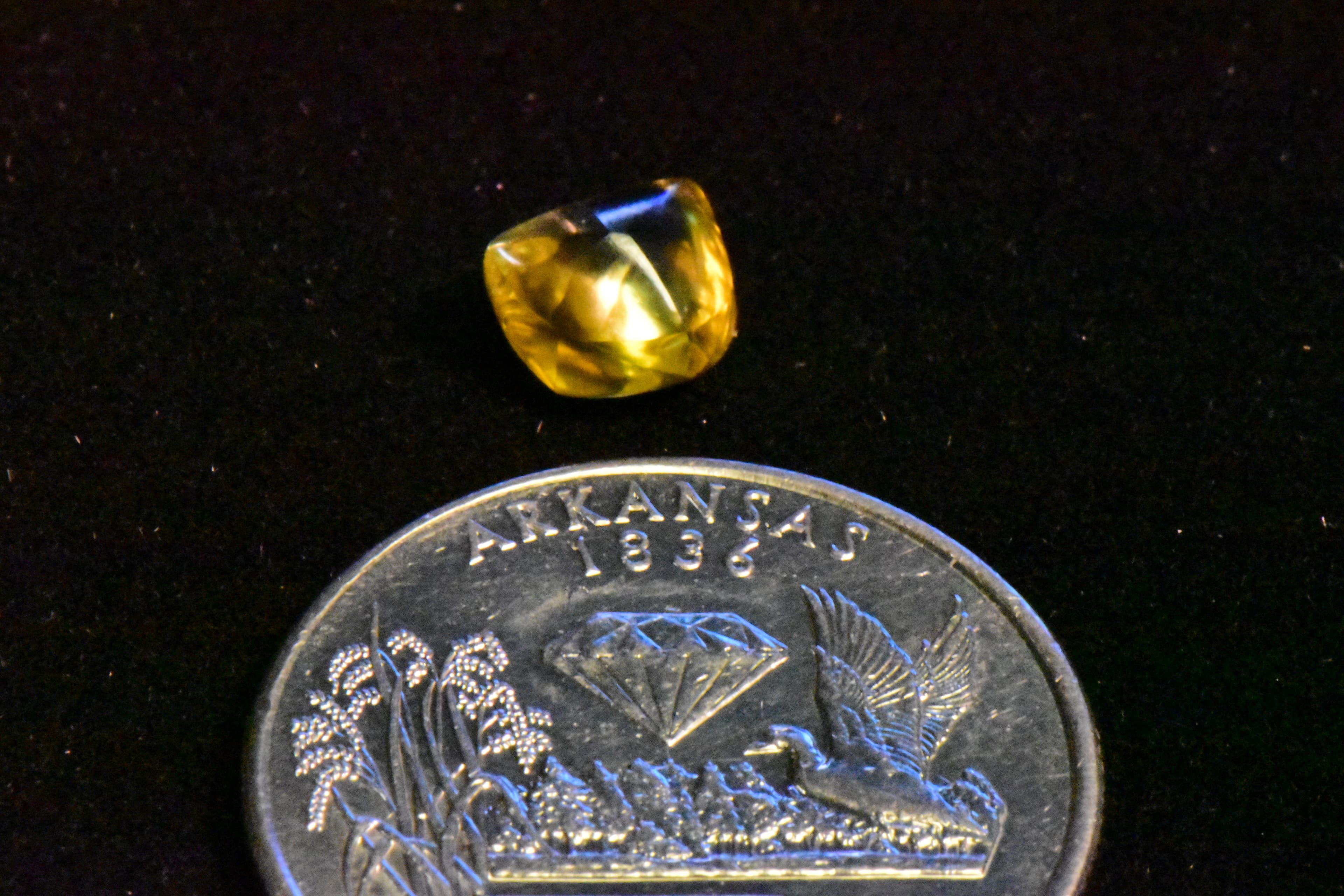
A Tennessee grandfather uncovered a 2.29-carat diamond this month during a family outing at the Crater of Diamonds State Park in Murfreesboro, Arkansas.
Barry G. Smith of Germantown, Tennessee, was visiting the park with his wife and two granddaughters on Sunday, August 16. Smith said he had modest expectations going into the day. "I never expected to find a diamond here," Smith admitted. "The potential was there, but you never come here expecting to find one."
The Crater of Diamonds State Park is unique as the only location in the world where the public can search for natural diamonds in their original volcanic source. The park features a 37-acre field where visitors can search for a wide range of rocks, minerals, and gemstones, and anything found can be kept.
Smith and his family rented a wagon and a diamond-searching kit to guide their adventure. Within just 30 minutes, Smith noticed something glinting in the East Drain section of the search area. Initially, he believed it was mica, a shiny but common mineral. However, suspecting it might be worth a closer look, he placed the stone in his shirt pocket and continued hunting alongside his granddaughters.
When Smith brought the find to park staff to inspect, their reaction confirmed its significance. Park officials determined it was a 2.29-carat yellow diamond—a rare hue among diamonds found at the site. Facility Supervisor Ralph Hall, who examined the gem, said its shape and color reminded him of another notable discovery earlier this year. That gem, a striking 6.03-carat diamond, also drew attention from visitors and staff.
To commemorate the moment, Smith named his diamond the Sage Juniper Diamond, in honor of his two granddaughters, Sage and Juniper. According to park officials, Smith's find is the third-largest diamond registered at the park this year, among a total of 351 discoveries so far. On average, park visitors discover one to two diamonds each day.
Since opening as a park in 1972, Crater of Diamonds has attracted treasure hunters and enthusiasts wanting to experience the excitement of finding and keeping a piece of geological history. Smith’s unexpected discovery adds another notable gem to the park’s storied history.