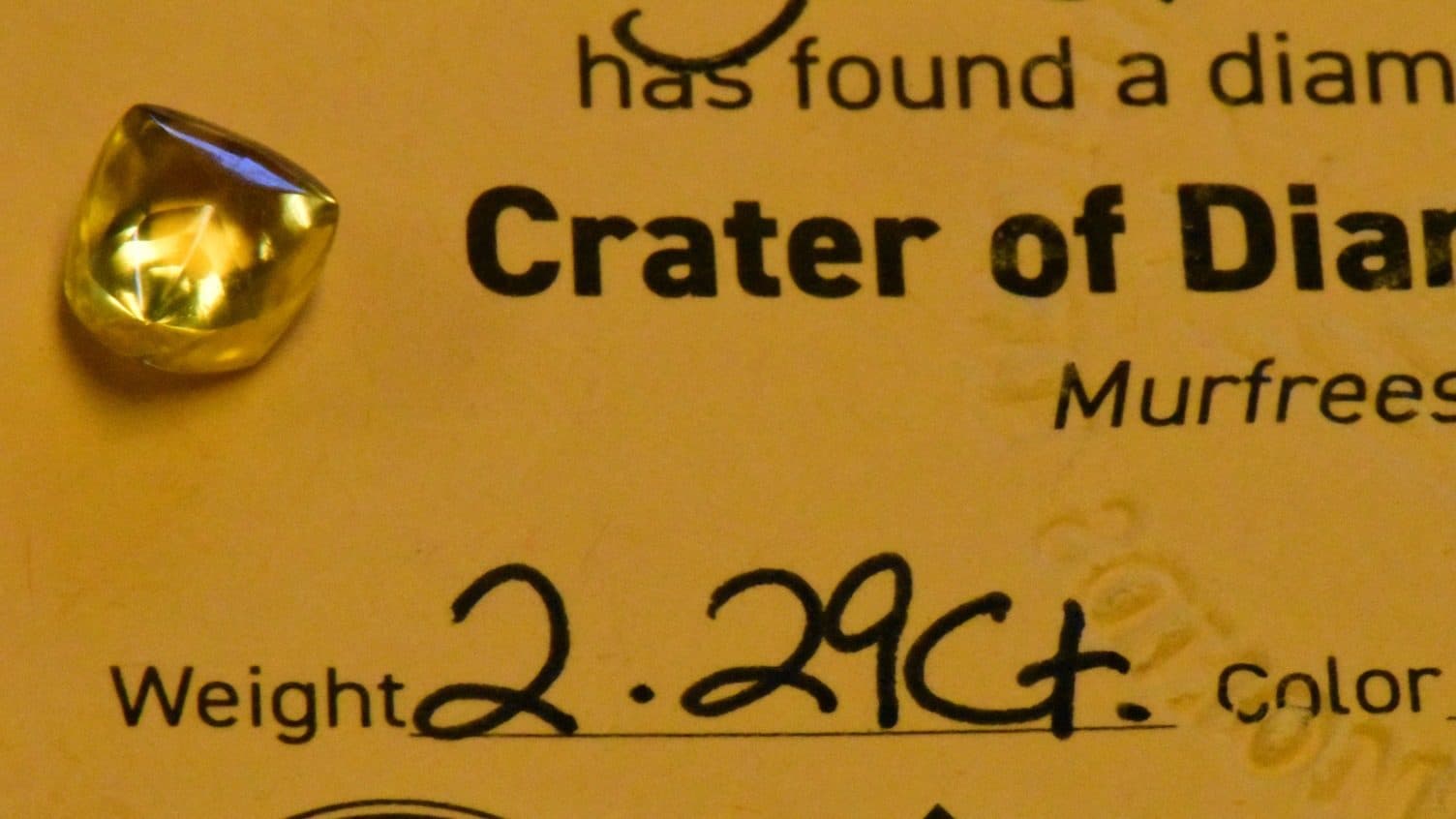
MURFREESBORO, Ark. – A Tennessee man struck literal gold—or rather, diamond—during a family outing to Arkansas’ Crater of Diamonds State Park.
Barry G. Smith, of Germantown, was exploring the park on Sunday, August 16, with his wife and two granddaughters, Sage and Juniper. While the family expected a fun adventure, they never imagined finding a significant gem during their visit.
The group rented equipment from the park and began their search in the park’s East Drain, part of its 37.5-acre diamond field. About 30 minutes into their search, Smith spotted a glimmering object. Initially unsure if it was simply a common mineral like mica or quartz, he pocketed the stone and continued digging with his granddaughters until the heat forced the family to break for lunch.
Before leaving the search area, Smith stopped at the park’s Diamond Discovery Center to have the gem inspected. Park staff quickly confirmed it was a stunning 2.29-carat canary yellow diamond. Ralph Hall, Facility Supervisor, remarked on the rarity and beauty of the find, noting its similarity in color and shape to another well-known diamond unearthed earlier this year.
Yellow diamonds, which are less common than white or brown diamonds at Crater of Diamonds, owe their coloration to nitrogen impurities that absorb blue light and reflect yellow wavelengths during formation.
Smith, elated by the discovery, expressed his surprise. “I never expected to find a diamond here,” he said. “The potential was there, but you never come here expecting to find one.”
Smith chose to name his gem the Sage Juniper Diamond, in honor of his granddaughters. About the size of a black-eyed pea, it is the third-largest diamond registered at the park this year. Since the start of 2026, a total of 351 diamonds have been logged by visitors, with an average of one to two diamonds discovered each day.
Crater of Diamonds State Park, located on Arkansas Highway 301 in Murfreesboro, is one of the few places in the world where the public can search for diamonds in their original volcanic source. The park provides tools for rent and advice for visitors, emphasizing the importance of staying hydrated, using sun protection, and taking breaks in the shade during searches.
The park is open daily from 8 a.m. to 5 p.m., except for select holidays. It continues to attract treasure-hunters from around the world eager to try their luck in its unique diamond field.