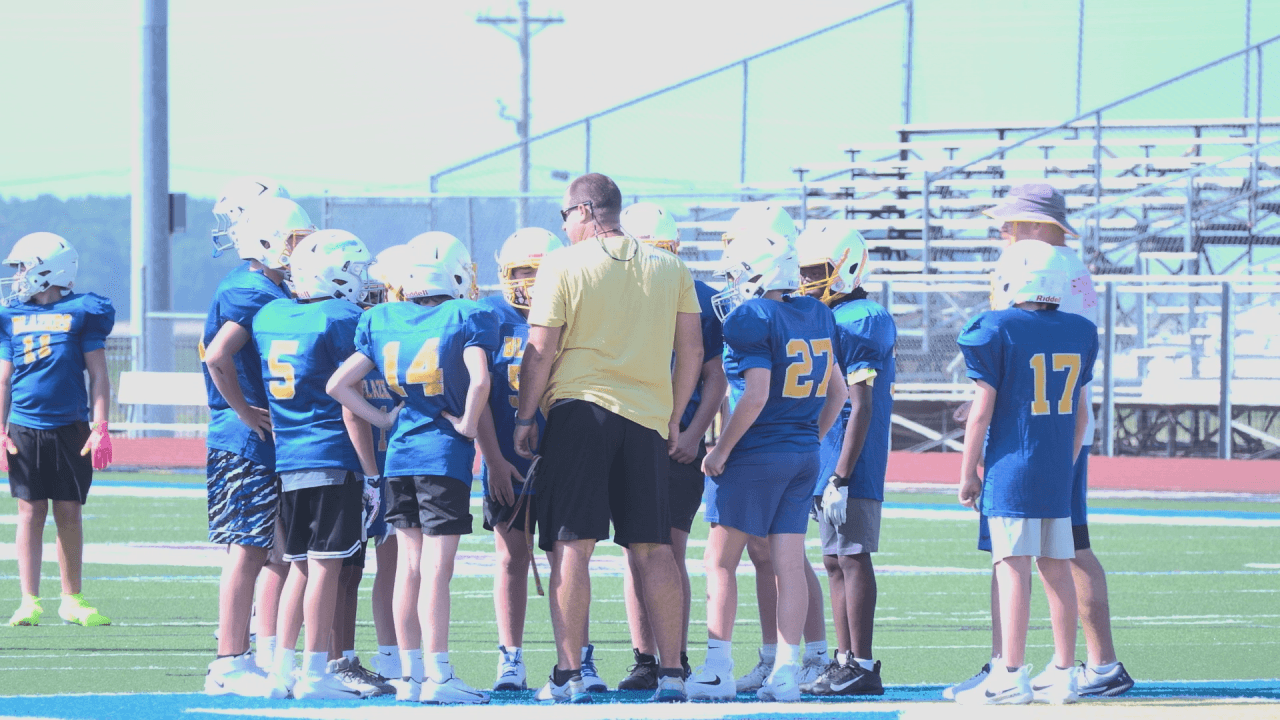
JONESBORO, Ark. — As fall sports season begins, a local school district is reviewing its concussion management protocols, underscoring the importance of student-athlete safety during high-contact activities. Medical experts stress that symptoms of brain injuries like concussions are not always easy to identify.
A concussion is a brain injury often caused by a bump, blow, or jolt to the head. Such impacts can stretch brain cells and induce chemical changes that temporarily impede normal brain function. Studies published in PubMed Central indicate that between 3% and 5% of tackle football players may experience a concussion while playing sports.
Dr. Adam Hurst, a pediatrician with the NYIT College of Medicine at Arkansas State University, explained that symptoms often manifest immediately after an impact. “With physical contact or a ball, that strong force to the head makes it pause, messes up the rhythm of the brain,” Hurst said. “Commonly, you’re going to see symptoms almost immediately—severe headache, confusion, vomiting, or maybe feelings of grogginess or being altered. Such a range of symptoms.”
Hurst emphasized the importance of student-athletes reporting any unusual sensations immediately after an injury. “Go to your coach. Go to the trainers. Go to your parents. And make sure that they know, ‘I’m not feeling right. This is off.’ If the trainer can screen you and make sure that, hey, we sit out and we’re going to heal. And let’s follow up with your doctor,” Hurst recommended.
Recovery times for concussions vary, typically requiring days to weeks of rest depending on the severity. Rushing back into play too soon can worsen the injury, according to Hurst.
Valley View Athletic Director Ron Teat outlined the school’s return-to-play program, emphasizing a gradual approach to reintroducing activity. “You can start with a little bit of light movement,” Teat said. Highlighting modern challenges, Teat noted, “Obviously the biggest challenge we have with kids today is the phones, the iPads, the things like that, to stay off of it where things happen.”
Teat added that if a student experiences a recurrence of symptoms after being cleared, the school’s protocol requires restarting the recovery process from the beginning.
The district’s efforts align with growing awareness of concussion risks, especially in youth sports, where proper intervention can significantly impact long-term health and safety.