Baxter County is moving closer to acquiring specialized equipment to assist in water recovery operations. An ordinance scheduled for the Quorum Court’s September 1 meeting would allocate $18,000 from the county’s general revenue fund to the coroner’s 2026 budget for purchasing an AquaEye underwater body locating device. The ordinance is sponsored by the Baxter County Budget Committee, and County Judge Kevin Litty will preside over the meeting at 5:30 p.m. in the courthouse.
Coroner Sam Seamans, who tested the handheld sonar device throughout the summer using a loaner unit from its Canadian manufacturer, VodaSafe, demonstrated its capabilities to the court on August 4. Seamans explained that while the device retails for approximately $18,000, a government price is closer to $13,000. However, he expressed interest in the higher-priced package, which includes a mapping-enabled tablet.
"The tablet isn’t a luxury,” Seamans said, noting that it simplifies search operations by allowing crews to mark off cleared areas and better coordinate efforts, rather than relying on memory. Justices of the Peace, including Cameron Davis, supported moving quickly to approve funding. Justice Litty had previously advised patience to ensure the device fully meets expectations before making the purchase.
The AquaEye works similarly to a fish finder but uses advanced sonar technology to differentiate between objects underwater. It identifies likely human targets with red Xs and possible targets with yellow circles, displaying their depth and distance. Unaffected by muddy water, the device has been noted for providing rapid results, taking less than 45 seconds to generate an image.
Chief Deputy Coroner Sara Fischer, who is set to succeed Seamans next year, has extensively trained with the device and conducted over 100 test scans at Bull Shoals Lake. During tests, the AquaEye successfully identified divers at depths ranging from 40 to 100 feet, with scan data matching dive watches within two feet of accuracy. "It provides a picture in under 45 seconds, and every time, I was able to successfully see both people," Fischer said.
Fischer emphasized that the device could drastically reduce search times. Current methods involving the Sheriff’s Office, the Arkansas Game and Fish Commission, and the U.S. Army Corps of Engineers often take an hour or more to return a usable sonar image. With the AquaEye, one operator can scan approximately two acres in under five minutes, according to the manufacturer. Fischer noted that no other Arkansas county owns the device, which could position Baxter County to assist other jurisdictions as needed.
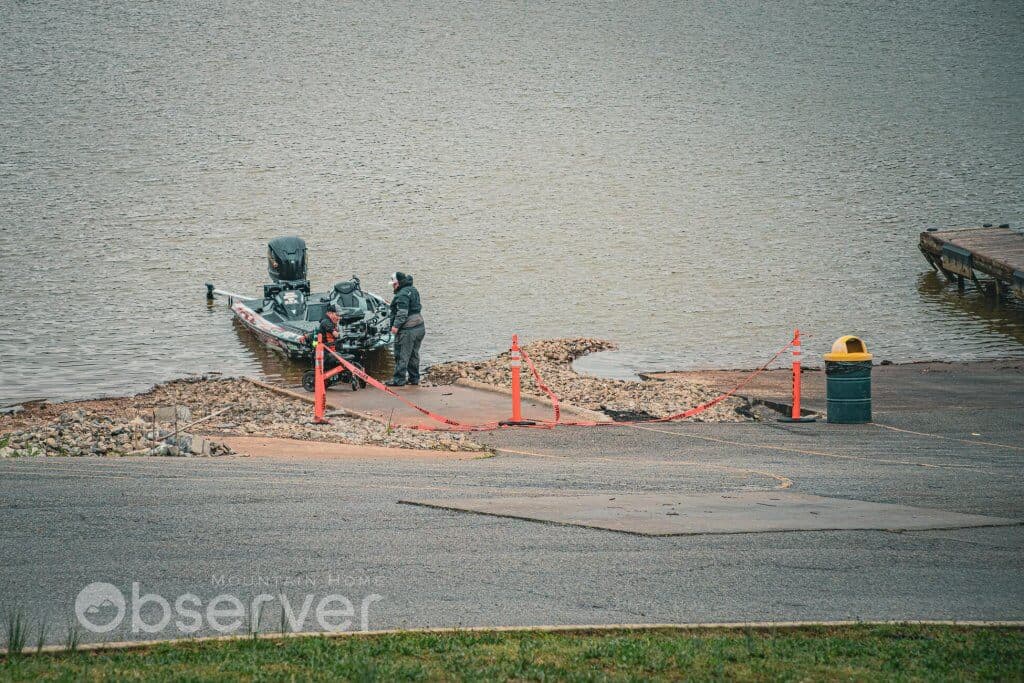
Baxter County’s abundance of water makes such a tool particularly valuable. The region includes two large lakes, rivers, quarries, and deep ponds. "Every year, there’s more than one drowning," Seamans said, citing recent cases. The most recent search, involving a man reported missing at Bull Shoals Lake in April, took five weeks.
In addition to speeding recovery efforts, Fischer said the AquaEye could help close long-standing cases. "We have a cold case for a gentleman who has been down for years," she noted. The device can detect partially decomposed and skeletal remains, which could aid in resolving older investigations.
The office has already assisted law enforcement in Harrison with the loaner device in locating remains in a quarry. Investigators believe the discovery could be tied to a woman missing for over 40 years.
Seamans stressed the impact on grieving families, referencing a past case of a child whose body was recovered after several days. "That is excruciating for people waiting for resolution," he said.
The $18,000 proposal is not the only item on the Quorum Court’s agenda related to the coroner’s office. A separate ordinance seeks to allocate funds from the sale of the Health Department building for the construction of a new coroner’s facility. Pending approval, $215,000 would be added to an August appropriation of $561,926.75 for that project.
The Quorum Court will decide both matters on Tuesday evening.