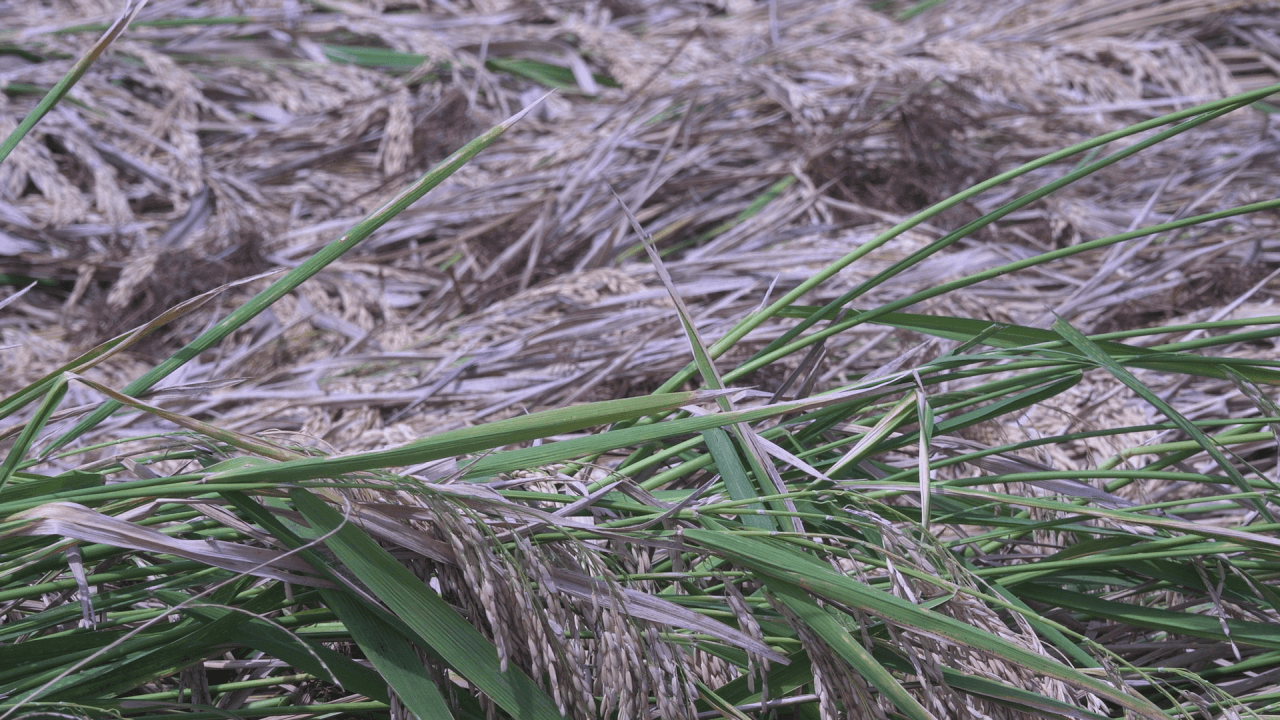
A severe thunderstorm coupled with this summer's extreme heat has damaged crops and increased harvesting costs for rice farmer Joe Christian of Cash, Arkansas.
Christian, the owner of JLC Farms, explained that his fields are usually flooded for most of the growing season, with water drained approximately two weeks before harvest. This year’s intense dry heat dried the soil more quickly than usual, weakening stalks and leaving them more susceptible to wind damage.
“So we flood the rice most of the year. But about two weeks before we harvest it, we pull the water off. And because it was so hot and dry this year, it dried out faster and the ground dried out, which caused the stalk to deteriorate. And it kind of just, with a little wind, blew it down,” Christian said.
On Saturday, the damage worsened when a thunderstorm swept through the region, flattening roughly 50 acres of Christian’s crops. While this represents only a small portion of his overall operation, the impact on production is significant. Flattened rice can still be harvested, but recovering it demands twice as much effort and increased costs.
“It’s just another cost. I mean, we’re trying to survive out here. We’re trying to do the best we can with what we have and hopefully get through the year,” Christian said. “We need good yields. Right now, yields are some good, some just average that we’ve harvested already.”
Compounding his difficulties is an oversupply of rice in the market, which Christian says drives prices down. Additionally, trade barriers limit opportunities to export surplus rice to international buyers, putting further financial pressure on his operation.
“They bring it in here and dump it on and cause us a problem with the supply, which affects our prices,” Christian said. “And another thing, we can’t, we can’t sell to other countries because they have protection.”
Christian expects to file an insurance claim to help offset the additional harvesting costs caused by the storm and drought conditions.
The damage underscores the challenges many Arkansas farmers face during this growing season, as volatile weather patterns continue to strain agricultural operations across the state.