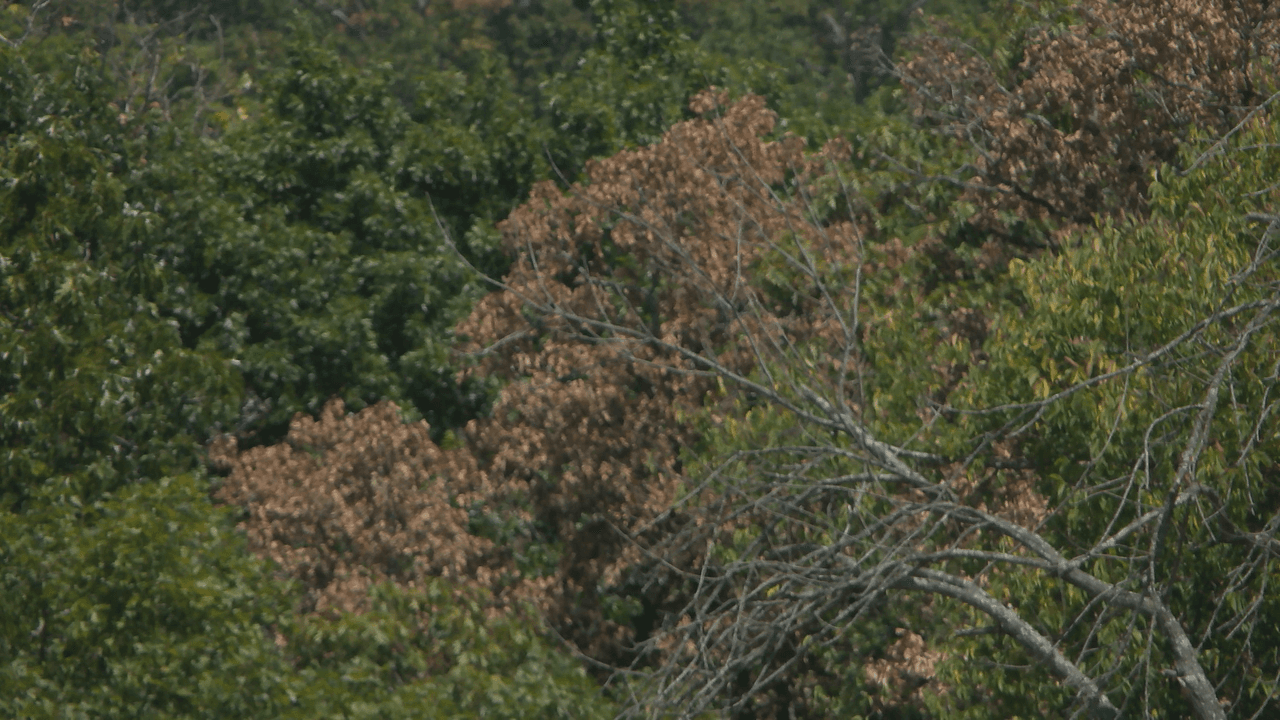
The Arkansas Department of Agriculture has received reports of trees across eastern Arkansas prematurely displaying fall colors, including yellow and brown hues.
According to Chandler Barton of the Arkansas Department of Agriculture, no official cause for the phenomena has been determined yet. However, he noted that extended periods of high heat and ongoing drought conditions are known contributors to tree stress, which can trigger early color changes.
Barton explained that these color shifts often represent a stress response in which trees shed leaves that no longer contribute to photosynthesis. This defensive mechanism allows the tree to conserve energy and improve its chances of survival.
“It’s not the whole tree that’s dying,” Barton said. “It’s actually protecting itself from dying by causing these leaves to stop being green and turn brown.”
Barton also emphasized that this stress response differs among species. While deciduous trees may experience early leaf drop as part of their protective measures, evergreen trees, such as pines, are less equipped to handle such conditions. If evergreen trees begin to change color or shed leaves, Barton warned this could signal a significant health issue since these trees are meant to remain green year-round.
Additionally, yard trees, which are often transplanted or located outside their natural environments, may be more susceptible to stress during severe weather conditions.
Although some areas in northeast Arkansas received rainfall on Wednesday night, much of the region remains in drought conditions, as identified by the latest U.S. Drought Monitor report.
Barton cautioned that while early color changes are a warning sign, they do not necessarily mean that trees are dying. Assessments of the full impact on trees from this season’s heat and drought will likely need to wait until next spring.
Residents concerned about the health of their trees are advised to monitor signs of stress and provide extra care where possible during sustained dry spells.