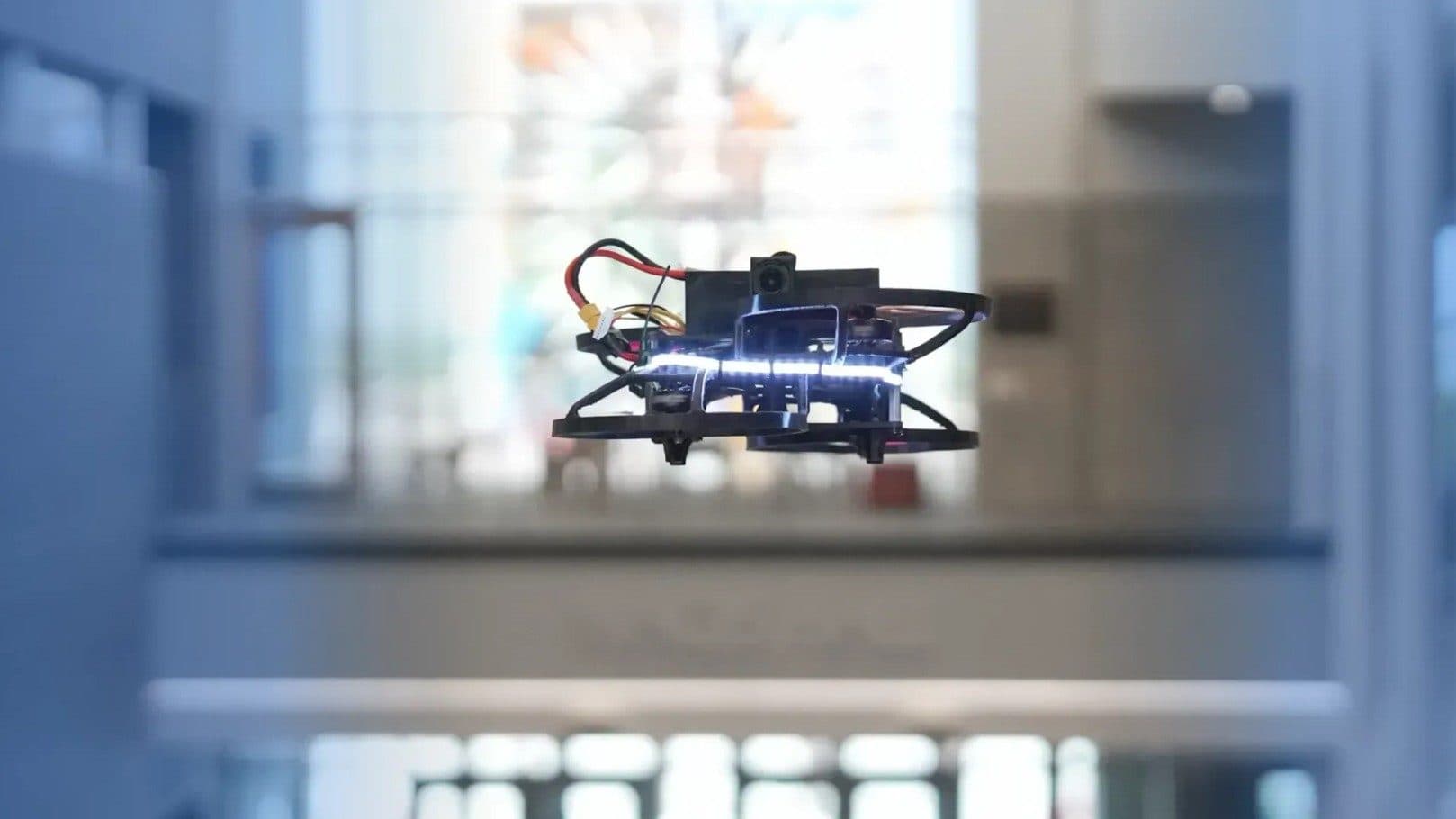
An Austin-based company demonstrated its school-security drones at the Arkansas Capitol on Wednesday, presenting the technology as a means to respond swiftly during active-shooter emergencies. The demonstration by the company, Campus Guardian Angel, illustrated drones that would be stationed in locked docking systems on school campuses and remotely piloted from Texas in the event of an emergency alert.
Company CEO Justin Marston explained that the drones aim to provide what he referred to as “less-lethal effects” to protect students and staff. “What we’re doing is we’re using drones with less-lethal effects to protect schools and to stop active shooters if they were to come into a school,” Marston stated. The drones are equipped with tools such as lights, sounds, and pepper-based deterrents, while also providing live video feeds to law enforcement.
Chief Tactical Officer Bill King emphasized that the system could help emergency responders better understand unfolding situations. According to King, the drones are capable of reaching speeds of up to 100 mph, though their actual speed would depend on the specific scenario.
Despite the potential of the technology, Arkansas lawmakers expressed concerns about its implementation. Questions were raised about responsibility, legal liability, oversight, and the range of capabilities provided by the drones. State Rep. David Ray, a Republican from Maumelle, commented on the complexities of regulating such technology, while Rep. Robin Lundstrum, also a Republican, suggested it could serve as a preventative measure. “We’re learning and reading and trying to gather information,” Lundstrum said. “Drone technology has been around for a while, and it’s being used in a lot of different applications. This one, I think, we need as a deterrent.”
Campus Guardian Angel has already established programs in other states, including Florida and Georgia. In Georgia, $550,000 was approved to fund pilot programs in five school districts. Florida has allocated resources for similar initiatives. Marston said the cost for implementing the system in a school of approximately 80,000 square feet would be roughly $20,000 per year.
Although the company expressed interest in bringing the technology to Arkansas, there are no agreements yet in place. Arkansas State University clarified its position in a statement made by spokesman Todd Clark. “At this time, the university does not have a contract or formal agreement with Campus Guardian Angel, and no decision has been made to install the drones on our campus,” Clark stated.