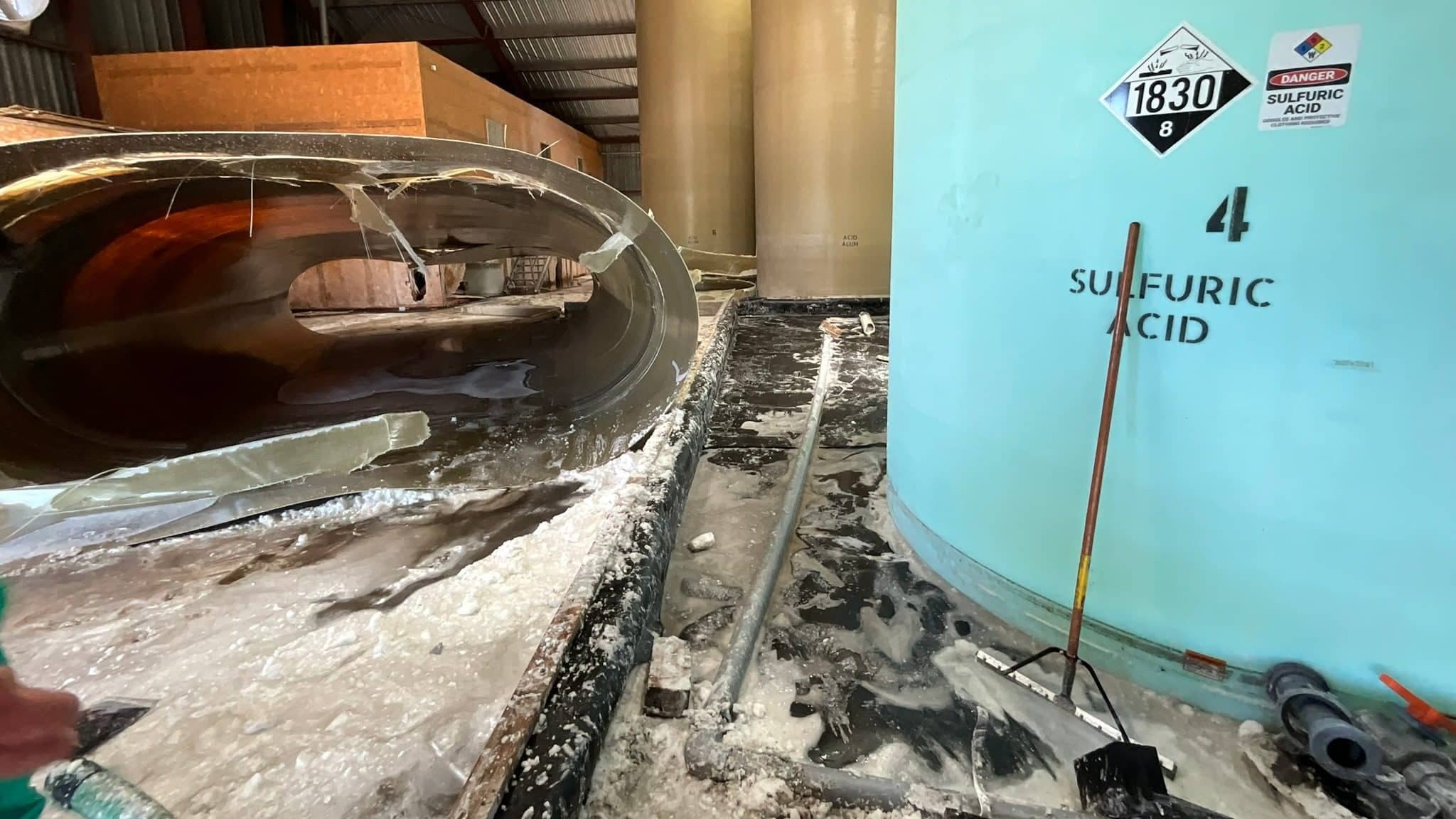
A chemical plant in Fort Smith that released over 77,000 gallons of acid in May operated for more than two years without the required environmental permits, state regulatory authorities said. The incident, which polluted nearby waterways, killed thousands of fish, and damaged public infrastructure, has sparked investigations and questions about regulatory oversight.
Georgia-based C&S Chemicals began operations at the Fort Smith facility in November 2024, producing a sulfuric acid-based product called Poultry Guard, according to a former employee and company announcements. However, Arkansas Department of Energy and Environment (E&E) officials stated the agency was unaware of the plant’s existence until the May 2 spill and confirmed that the company lacked operational and stormwater permits required under the Clean Water Act.
The spill occurred when a tank of acidified aluminum sulfate ruptured, causing a cascade that breached the facility's walls and flowed into a nearby creek. Emergency responders were initially unaware of the hazardous chemicals stored at the site, resulting in avoidable damage to a Fort Smith fire truck, which drove through the spilled acid. City officials are determining whether the $2 million vehicle can be repaired or needs replacement.
C&S Chemicals had also failed to file mandatory hazardous chemical inventory reports by the March 1 deadline, as mandated under the federal Emergency Planning and Community Right-to-Know Act. The company submitted its report two hours after the spill began, with an internal email describing the omission as “an oversight.” The Arkansas Department of Emergency Management later fined the company $790 for the late filing.
Environmental impacts were severe. The acidity of the creek along the facility’s property line killed nearly all aquatic life in the area, according to multiple officials. The spill affected approximately three miles of waterways, terminating at the Poteau River in Oklahoma. Brandon Brown, a fisheries biologist with the Oklahoma Department of Wildlife Conservation, recorded approximately 2,750 dead fish but noted the true number may be far higher. Rare species such as golden topminnows and redfin darters were among those entirely eradicated from the affected waters.
The Arkansas Game and Fish Commission initially reported 300 small fish deaths but later confirmed, through additional analysis, that more than 3,000 animals, including crayfish and turtles, were killed. State and federal agencies described the ecological damage as catastrophic.
Both the Arkansas and Oklahoma wildlife agencies are now advocating for C&S Chemicals to fund ecosystem restoration, including fish restocking and conservation programs. Arkansas officials say the company has been cooperative in preliminary discussions about remediation, though no final agreement has been reached.
C&S Chemicals has not commented on the spill, nor has it publicly addressed its lack of permits or future operational plans. Questions about penalties and enforcement actions remain unresolved as state and federal investigations continue. Officials from the EPA and Arkansas E&E both declined to comment on potential legal consequences, citing ongoing inquiries. Violations of the Clean Water Act can lead to substantial fines or other penalties.
The incident highlights broader concerns about regulatory lapses. Rep. Zack Gramlich of Fort Smith questioned how the plant avoided oversight for years. “If there are other companies out there operating like this, I want to make sure we address it before another disaster occurs,” Gramlich said.
The affected stream on Odie and Gina Dillard’s property in Pocola, Oklahoma remains largely lifeless months later. While some turtles and frogs have returned, fish populations and larger wildlife have not. “We still don’t have answers,” Odie Dillard said, expressing frustration about the lack of communication regarding the spill’s cause.
For Brown, the tragedy underscores the fragility of local ecosystems. “This illustrates how quickly it can all be lost,” he said.