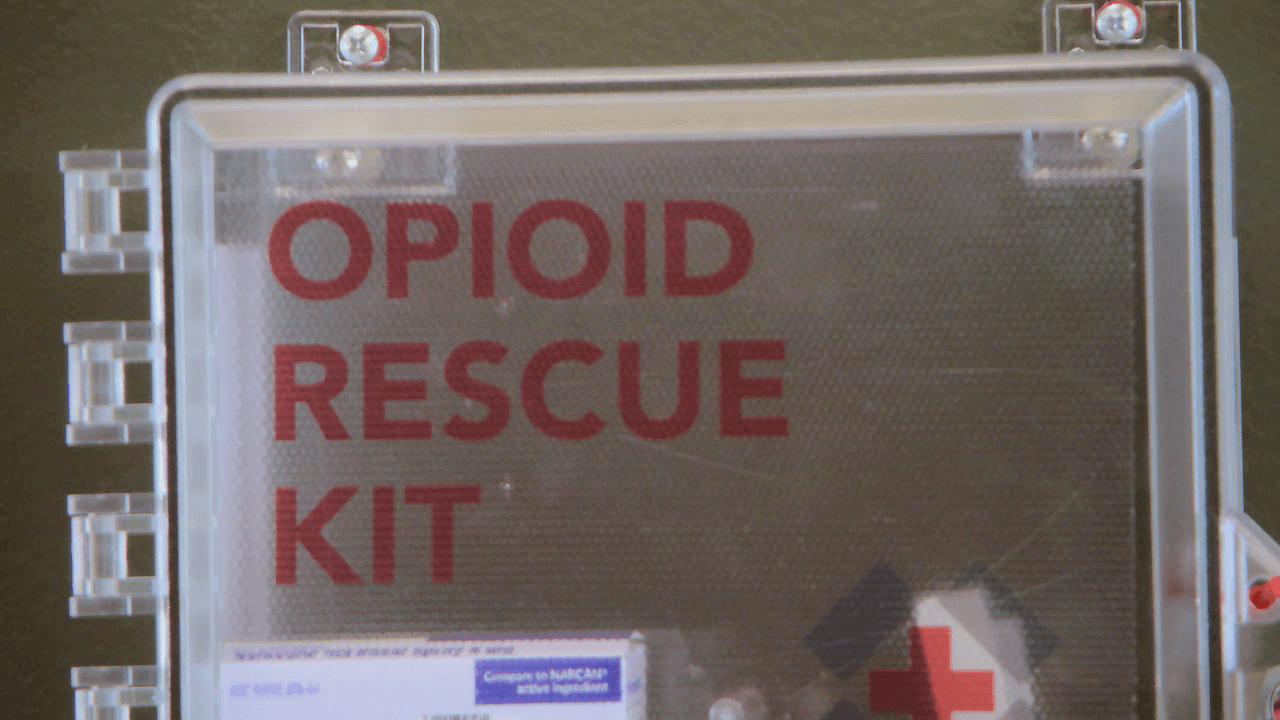
Arkansas State University has equipped its campus with 130 opioid rescue kits to combat drug overdose deaths among students, according to Wyatt Reed, the university’s emergency manager. The effort aligns with state requirements to provide clearly labeled opioid overdose kits across college campuses.
Each rescue kit includes Narcan nasal spray, a breathing mask, and step-by-step instructions to assist someone showing signs of an opioid overdose until professional help arrives. Reed explained that the kits, sealed with a red tag, can be quickly accessed by twisting a knob to break the seal. Once used, the kits are restocked.
“If you use Flonase, you can use Narcan,” Reed said, emphasizing the ease of using the nasal spray.
Last year, 19 Arkansans under the age of 25 died from drug overdoses, according to data from Arkansas State University and the New York Institute of Technology College of Osteopathic Medicine (NYITCOM). Despite a decrease in the number of overdose deaths, both institutions remain focused on helping students recognize that lifesaving resources are available.
Dr. Shane Speights, dean of NYITCOM at Arkansas State, stressed that the administration of Narcan is only part of the emergency response. “This is not a complete fix to everything,” Speights said. “9-1-1 should be called, and first responders, including the fire department, EMS, and police, should be on the way. This is to get the person to the next stage.”
Speights acknowledged that a stigma remains around the use of Narcan but noted its potential to save lives. He pointed out that opioid misuse among college students is often unintentional, with studies indicating that approximately 20% of students misuse some form of opioid during their college years.
“Just like you wouldn’t hesitate for someone who’s unresponsive to grab that AED, you shouldn’t hesitate to grab the naloxone as well,” Speights said, drawing a parallel between the use of an automated external defibrillator (AED) and Narcan.
Beyond the rescue kits, Arkansas State University offers mental health support through its Wilson Counseling Center. This includes assistance for substance misuse and other challenges students may face.
The university’s initiative underscores a growing statewide focus on equipping communities to respond effectively to opioid-related health emergencies, particularly among young adults.