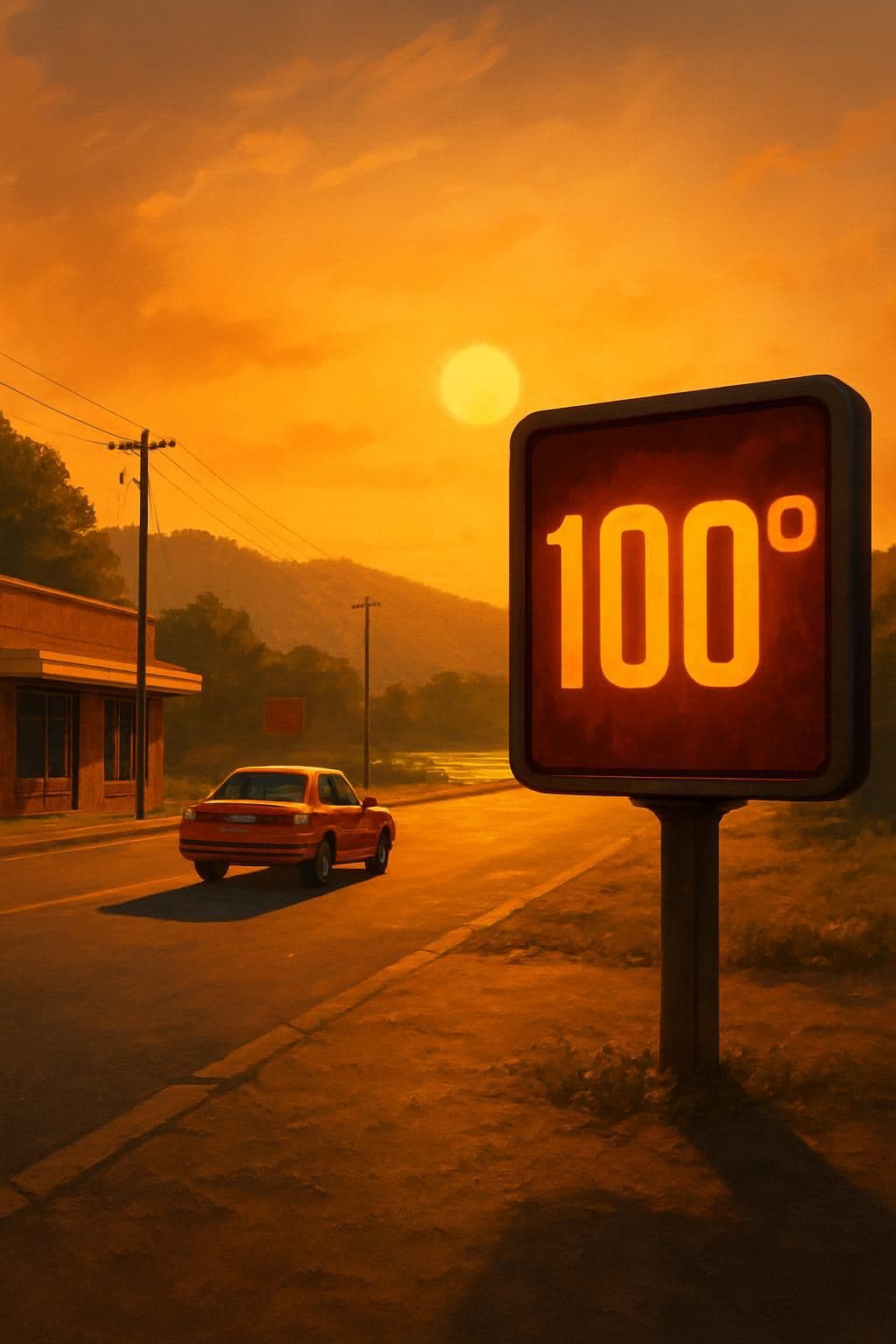
A stretch of dangerous summer heat is expected to persist across Arkansas through at least Monday, according to the National Weather Service (NWS). In a briefing issued Monday, the NWS in North Little Rock expressed medium confidence in an extended period of high temperatures, with limited rainfall potentially accelerating drought conditions statewide.
The southern half of Arkansas is expected to experience the most severe impacts, but northern regions, including north central Arkansas, will also face periods of excessive heat. Some temporary relief may occur in areas such as the Twin Lakes region as a stationary front moves into the state. This boundary could bring increased cloud cover, isolated thunderstorms, and slightly cooler conditions over the next several days. However, forecasters caution that while temporary cooling may occur, the overall duration of this heatwave remains more certain than specific peak temperatures.
Daytime highs in north central Arkansas are forecasted to range from the low to mid-90s, with some areas possibly reaching 100 degrees, particularly through Wednesday. A heat advisory is currently in effect Tuesday for portions of northern Arkansas, where heat index values may climb as high as 109 degrees.
The heatwave is expected to provide little relief during overnight hours. Lows statewide will likely stay in the mid to upper 70s, with some areas potentially seeing temperatures at or above 80 degrees Wednesday and Thursday. Prolonged periods of high temperatures without sufficient nighttime cooling have historically contributed to heat-related fatalities, especially among vulnerable populations, the NWS noted.
The excessive heat also poses challenges for outdoor activities, with students across the state participating in fall sports practices during this time. Officials are urging precautions to mitigate the risk of heat-related illnesses.
The NWS is closely monitoring the possibility of a flash drought developing in Arkansas. With above-normal temperatures expected to continue alongside inadequate rainfall, conditions could rapidly worsen. The Climate Prediction Center has flagged the state as being at risk for accelerated drought development.
Residents are advised to take precautions to stay safe during this heatwave, including staying hydrated, limiting outdoor activities during peak heat hours, and checking on vulnerable populations such as the elderly and those without access to air conditioning.