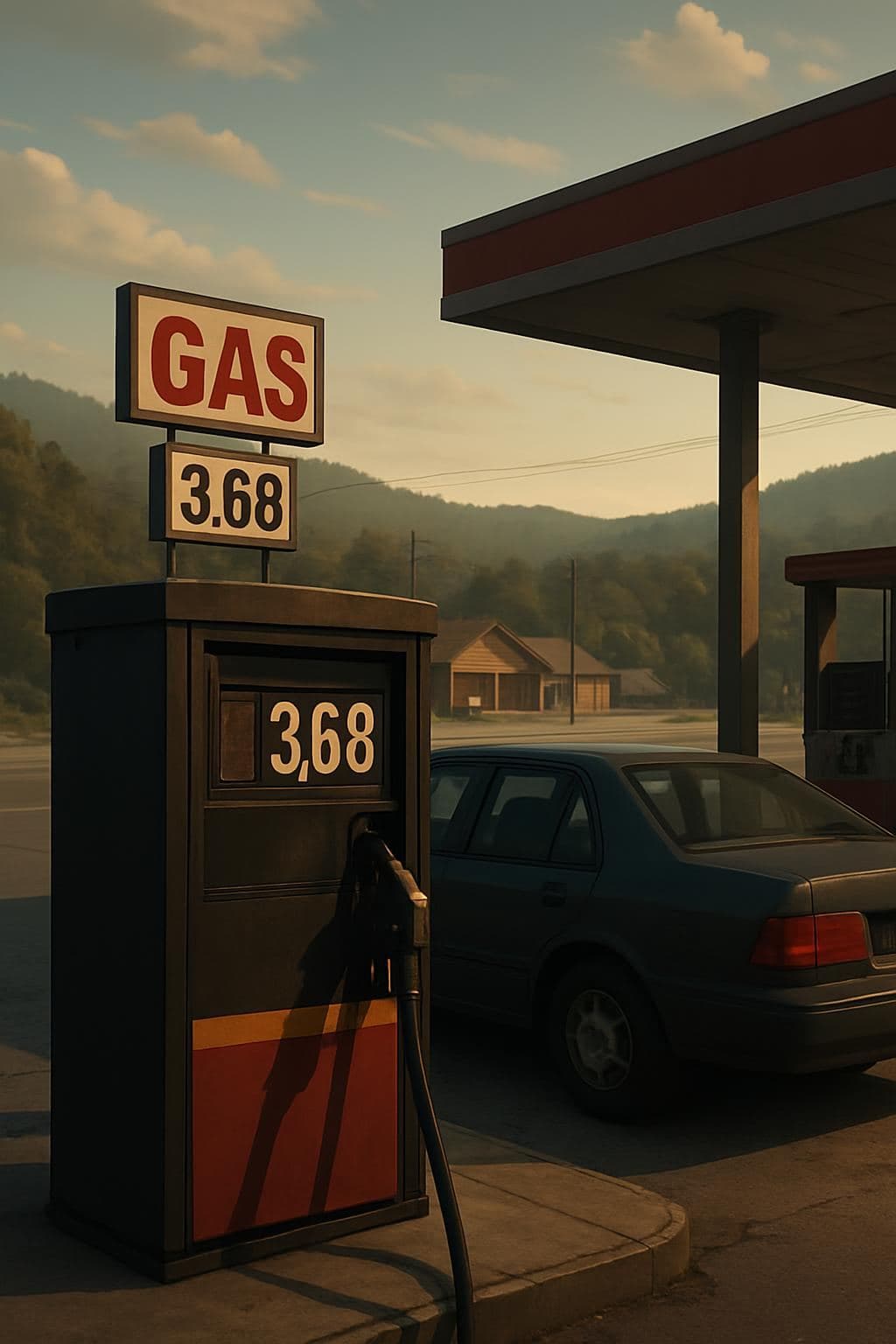
Gasoline prices in Arkansas rose by 11 cents per gallon last week, bringing the state average to $3.68 per gallon, according to GasBuddy's survey of 1,826 stations. The current average is 11.4 cents higher than a month ago and 99 cents above the average price at this time last year. Nationally, the average price of gasoline increased by 7.7 cents to $4.02 per gallon during the same period, with diesel prices jumping 14.3 cents to $5.41 per gallon.
Across Arkansas, the lowest gasoline price was reported at $3.25 per gallon in Hot Springs, while the highest reached $4.69 per gallon, a difference of $1.44 per gallon. In the Twin Lakes Area, gas prices varied by county. The cheapest fuel was reported at $3.61 per gallon in Calico Rock and Leslie. Baxter County prices ranged from $3.69 to $3.78 per gallon, while Marion County residents encountered prices between $3.73 to $3.75 per gallon. Fulton County's range was $3.67 to $3.77, Izard County saw prices from $3.61 to $3.79, and Stone County’s prices spanned $3.71 to $3.73 per gallon. Searcy and Boone counties reported prices between $3.61 and $3.79 per gallon, with insufficient data reported for Newton County.
Patrick De Haan, head of petroleum analysis for GasBuddy, attributed the rising prices to several global factors, including the ongoing closure of the critical Strait of Hormuz and continued Ukrainian strikes on Russian oil refineries, which have placed upward pressure on oil and refined product prices. Diesel prices have been particularly affected, rising in most areas nationwide. De Haan noted that a seasonal transition to less expensive winter-blend gasoline in the coming month could provide some relief, but significant geopolitical challenges appear poised to keep prices higher for the time being.
Historical data shows that Arkansans paid an average of $3.45 per gallon last year at this time, $3.07 in 2024, $2.69 in 2025, and $3.41 in 2022. The U.S. averages during those corresponding years were consistently higher. GasBuddy's analysis relies on vast datasets, including reports from over 150,000 U.S. gas stations, to compile weekly updates.