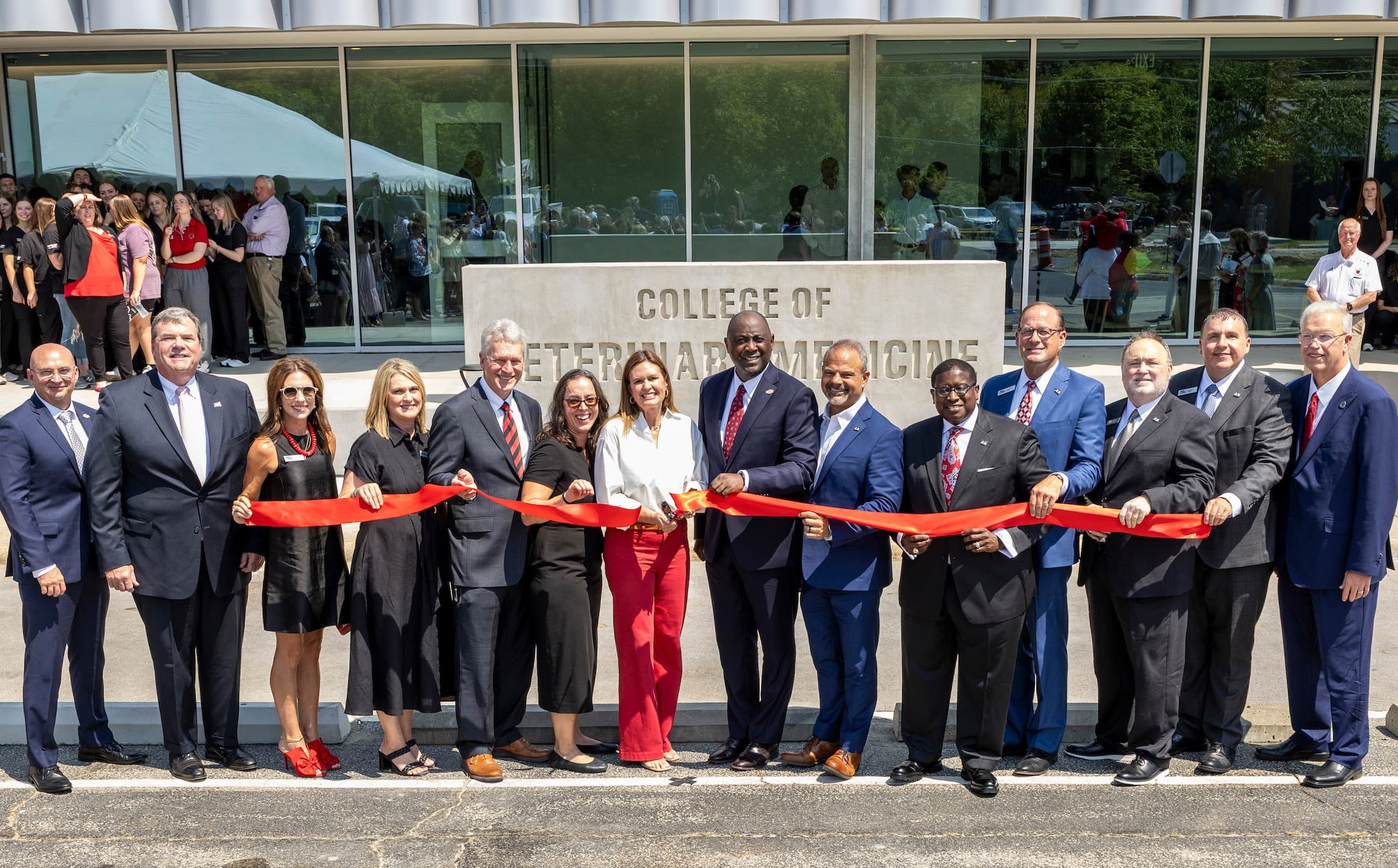
JONESBORO – Arkansas State University (A-State) celebrated a significant milestone Monday with the official opening of its College of Veterinary Medicine. The institution becomes the first in the state to offer Doctor of Veterinary Medicine (DVM) degrees, addressing a long-standing need for veterinary education within Arkansas.
“The future of veterinary medicine will be shaped by the students who study here, the faculty who teach here, and the research that emerges from this college,” said A-State Interim Chancellor Calvin White Jr.
The college welcomed its inaugural class of 122 students, including 46 Arkansans, as well as students from 35 other states and two countries. Over the past week, they have familiarized themselves with the campus where they will spend the next four years. Classes officially begin Tuesday.
Dr. Heidi Banse, dean of the College of Veterinary Medicine, emphasized the trust and pioneering spirit of the first-year students in joining a new program. “It takes a pioneer spirit when you are the inaugural class to join a new program and trust us to support you to become a competent veterinarian,” Banse said. “I am so grateful that they have trusted us with their futures.”
For Arkansans like Katie Kasserman of Paragould, the moment holds special significance. “We are not just a group of students starting a new semester. We are the answer to a long-standing need, the realization of years of planning, and the very first veterinary class in the history of the state of Arkansas,” Kasserman said during the ceremony. She added, “We know what it is like to look at our family farms, our local clinics, our rural communities, knowing that we want to serve them, but thinking that we had to leave them behind to get our education. Today, that changes.”
The launch of the veterinary school reflects years of planning and a significant investment in Arkansas’ rural communities, agriculture, and professional workforce. A-State System President Todd Shields underscored the importance of the day. “Today marks the realization of an ambitious idea that became possible through the dedication and perseverance of countless individuals,” Shields said. “When bold aspirations become reality, this is one of those moments for Arkansas State University.”
The event also drew state leaders, including Arkansas Governor Sarah Huckabee Sanders. Highlighting the anticipated impact of the program, Sanders suggested that training veterinarians locally will benefit rural areas and the state’s agricultural economy.
Bishop Robert G. Rudolph Jr., chair of the ASU System Board of Trustees, praised the program for its accessibility and inspiration. “Maybe they are from a small town. Maybe they are the first person in their family to pursue a professional degree. Maybe they wonder if there is a place for them. Now we can say there is a place for them here at Arkansas State University,” Rudolph said.
Chancellor White attributed the project’s success to the university’s dedication to addressing state needs. “This college was an intentional investment by our Board of Trustees and executive team to strengthen agriculture, support rural communities, address a critical workforce shortage, and contribute to the economic vitality of the state of Arkansas,” White said. “This is what public universities should do. We should educate. We should innovate. We should solve problems that matter to the people we serve.”
The college plans to admit its next class in 2027, continuing the mission to enhance veterinary education for the region.