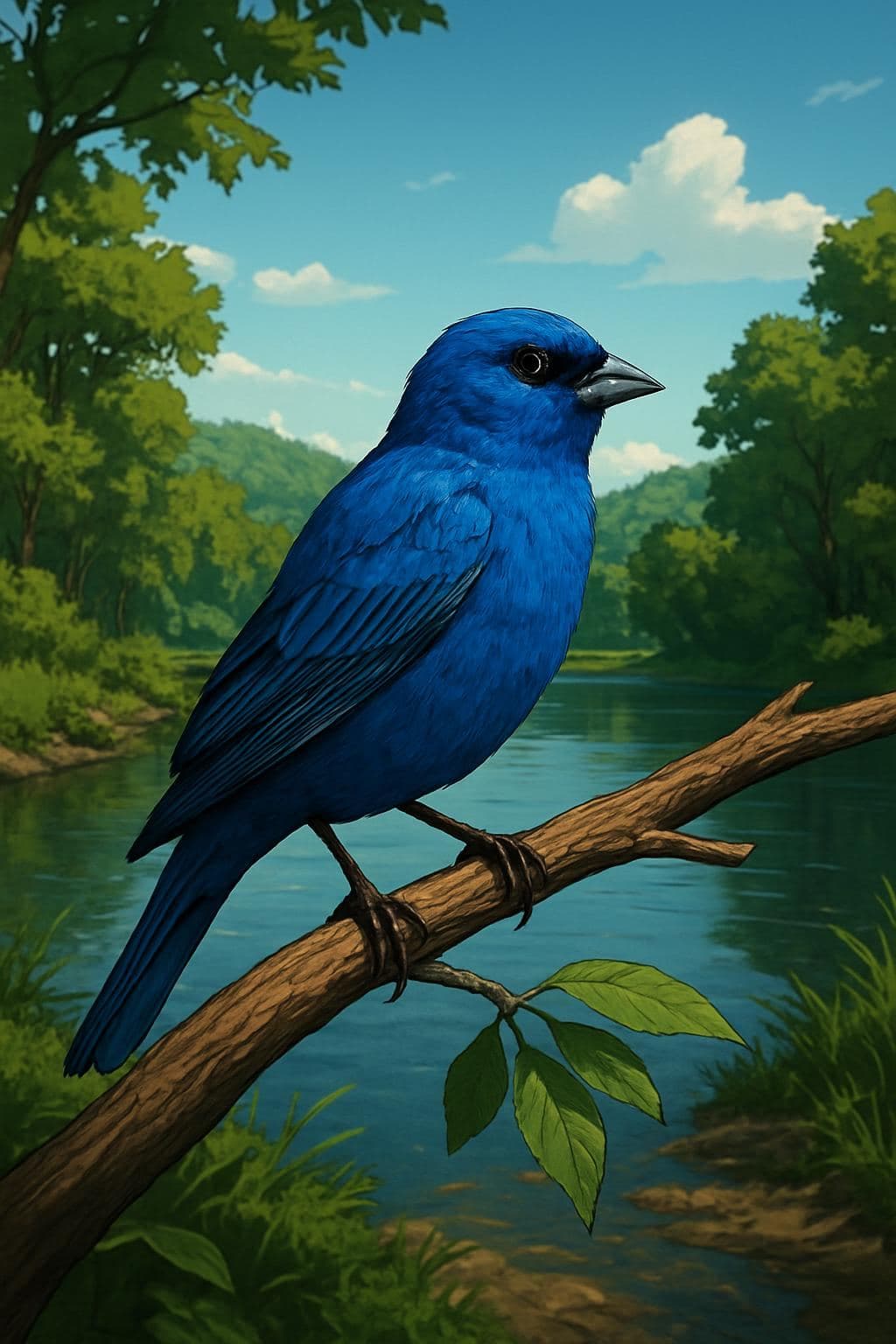
Indigo Buntings, known for the males' vivid blue feathers, are a familiar sight in Arkansas during spring and summer. These neotropical migratory birds begin arriving in late April to early May, where they stay through September before migrating south for the winter.
You’ll find Indigo Buntings in various habitats across the state, including brushy woodland edges, overgrown fields, rural roadsides, and areas where fields meet forests. They are most likely to appear near thick underbrush or low shrubs, often brightening the landscape with their plumage and song.
Male Indigo Buntings are especially striking with their deep indigo-blue feathers, which appear particularly vibrant in sunlight but more muted in the shade. Females typically display warm brown plumage with subtly streaked bellies. Their look may be accented by faint blue markings on their wings or tails.
Male buntings are also known for their enthusiastic singing. Their rapid, whistling song is often described as repetitive 'sweet, sweet, chew, chew' phrases, and they can often be heard belting out these tunes persistently during the warmer months.
For those hoping to attract Indigo Buntings to their yard, backyard feeders can be stocked with thistle seed, white millet, or mealworms. Landscaping with native plants and maintaining natural brushy cover can also appeal to these birds, as they tend to favor more natural surroundings over manicured lawns.
With their dazzling appearance and lively presence, Indigo Buntings are a beloved part of Arkansas’s seasonal bird population and a highlight for nature enthusiasts across the state.