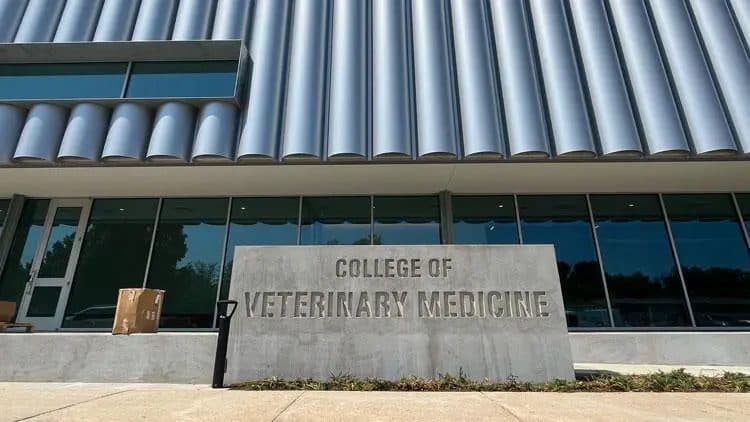
Jonesboro, Ark. — Arkansas State University (A-State) celebrated a significant milestone Tuesday with the official opening of its College of Veterinary Medicine, marked by a ribbon-cutting ceremony at the institution's new 56,000-square-foot facility, located at 2517 Cherokee Street on the university campus.
The event was attended by College of Veterinary Medicine Dean Dr. Heidi Banse, ASU System President Todd Shields, interim Chancellor Calvin White Jr., other university officials, members of the college team, and invited guests. The college, after years of development, welcomed its inaugural class earlier this month, with students beginning orientation on August 6. Classes began on Wednesday, August 12.
Efforts to launch the college addressed the increasing demand for veterinary professionals across Arkansas and the broader region. Interim Chancellor White emphasized the initiative’s wide-reaching impact. “This is a transformational day for Arkansas State University,” said White in a previous statement, adding that the program is designed to strengthen the university, expand opportunities for Arkansans, and meet critical workforce needs.
ASU System President Todd Shields, who has supported the initiative since assuming his role as A-State Chancellor in 2022, said the program’s mission is student-centered and workforce-driven. “Every decision was made with the goal of creating a program that serves students, meets workforce needs, and highlights the unique strengths of Arkansas State University,” Shields said.
Dr. Len Frey, senior associate dean of the college, has been involved in the project for nearly a decade, describing it as one of the university’s most ambitious strategic endeavors. He noted that the facility was specifically designed to support hands-on learning as part of the college’s competency-based veterinary curriculum. Barns constructed for the program were completed earlier this summer, further supporting the educational goals of the initiative.
Dr. Banse expressed enthusiasm for the program’s progress. “We are thrilled with our development to date and look forward to training students to be practice-ready and contribute to the veterinary workforce in Arkansas, the Mid-South, and beyond,” she said.
The inaugural class has 19 faculty members facilitating the first-year curriculum, with plans for A-State to hire an additional 15 faculty members within the next year. The program’s growth will include expanding clinical services, including its current ambulatory service that focuses on large-animal veterinary care for the community.
University officials have highlighted the program's potential to address workforce shortages in Arkansas and the surrounding region while also enhancing opportunities for veterinary education within the state.