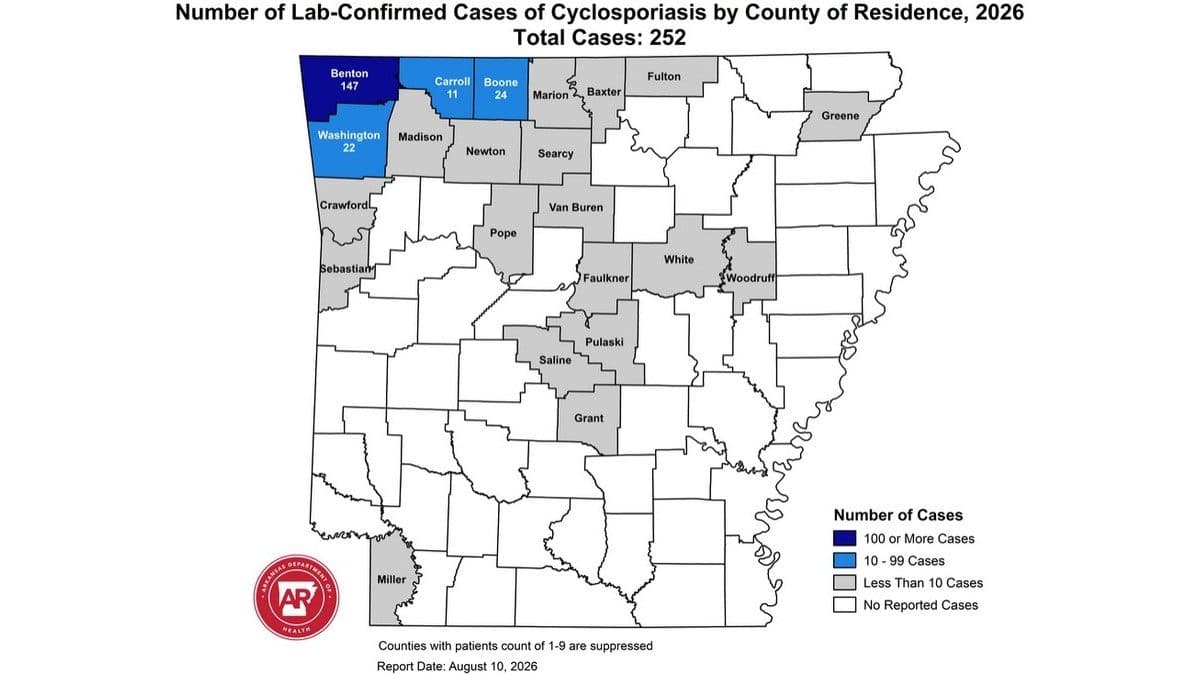
The Arkansas Department of Health (ADH) has confirmed that Fulton County is the latest in north-central Arkansas to report cases of cyclosporiasis, an intestinal illness caused by the microscopic parasite Cyclospora cayetanensis. As of Friday, ADH reported 252 total cases statewide, an increase of 15 cases since Thursday.
Boone County continues to have the third-highest number of cases in the state, reporting 24 cases as of Friday, five more than the previous day. Neighboring counties such as Baxter, Marion, Fulton, Searcy, and Newton each have fewer than 10 cases. Benton County, in northwest Arkansas, remains the hardest hit, with 147 reported cases.
Cyclosporiasis is contracted through consuming food or water contaminated with the Cyclospora parasite. While the illness is rarely life-threatening, symptoms commonly include watery diarrhea accompanied by frequent and sometimes explosive bowel movements. The sickness can persist for days to weeks if untreated, and symptoms may improve before returning in some cases.
According to ADH, people with healthy immune systems typically recover without treatment. However, individuals in poor health or with weakened immune systems may face longer or more severe illness. The preferred treatment is trimethoprim-sulfamethoxazole, and those experiencing symptoms are advised to contact a healthcare provider. Drinking fluids and getting rest are also encouraged to support recovery.
Officials emphasize that Cyclospora is unlikely to spread directly from person to person. Instead, the primary risk comes from consuming contaminated food or water. To reduce the risk, ADH recommends following food safety practices, including washing hands with soap and water before handling raw fruits and vegetables, thoroughly washing all produce under running water, and refrigerating prepared foods within two hours.
The ADH notes that an ongoing multistate outbreak has contributed to the rise in cases across Arkansas this year, with numbers notably higher in 2026 compared to previous years. Case counts typically increase during spring and summer months.
For additional information or guidance about cyclosporiasis, residents are advised to contact local healthcare providers or visit the ADH website.