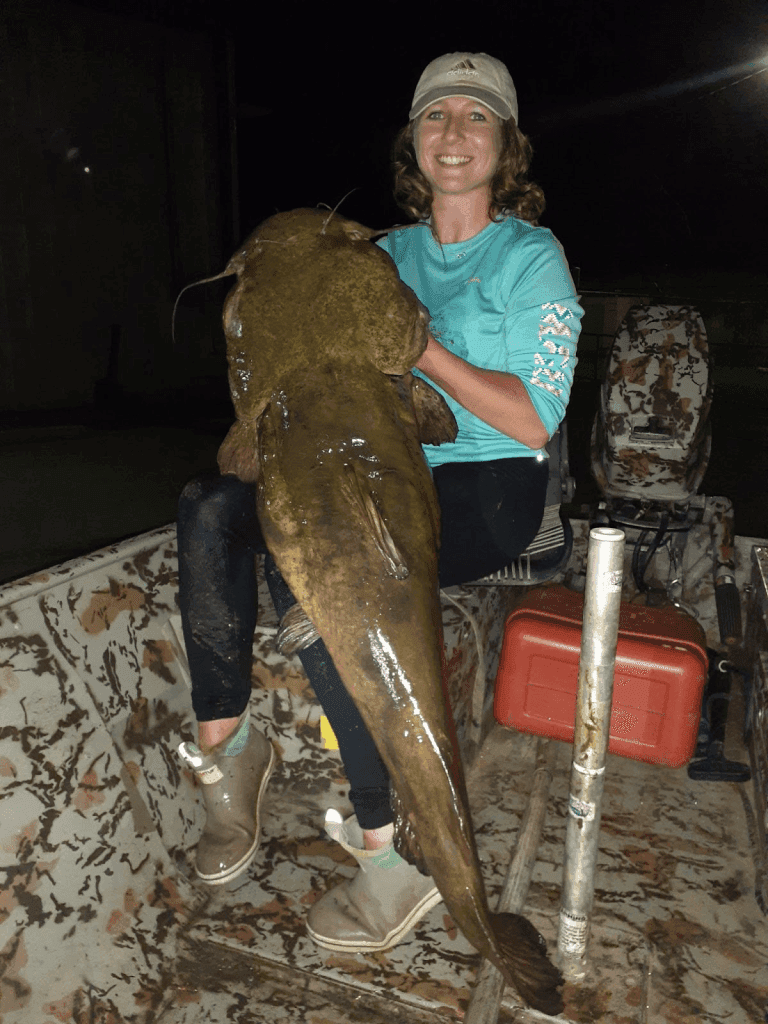
As summer temperatures soar across Arkansas, daytime fishing becomes a heated challenge for even the most avid anglers. However, passive fishing at night — utilizing trotlines, limblines, and juglines — provides a cooler alternative for catching catfish and stocking up for a late-summer fish fry.
Catfish behavior during these warm months creates a unique nighttime fishing opportunity. While they tend to stay in deep waters during the day, catfish move toward shallow flats to feed at dusk and through the night. Passive fishing methods target these feeding patterns by strategically placing baited lines in prime locations, such as the edges of creek channels connected to feeding areas.
One of the simplest methods is setting up limblines. Anglers tie a high-strength cotton line to an overhanging green tree limb in shallow waters, bait the hook, and add a small weight at the other end. When a fish takes the bait, the flexing tree branch can signal a catch without requiring the angler to stay at the line constantly. Cruising the banks to check for bent or moving branches is an effective way to manage limblines.
Trotlines provide a more advanced option, allowing multiple hooks along a single line. Anchored between two fixed points, typically from the bank out into the water, trotlines are equipped with evenly spaced drop lines. To avoid hazards to boaters, trotlines should remain below the water’s surface and weighted properly. During retrieval, having a secure clip or cleat on the boat helps manage the line efficiently while minimizing tangles.
Free-floating lines, once made from plastic bottles but now often constructed from vivid, buoyant pool noodles, remain a popular choice among nighttime fishers. These "jugs" offer a visible marker on the water's surface and can be outfitted with weighted systems that tip up when a fish bites—a feature that allows anglers to monitor action from a distance.
Selecting the right bait is crucial for targeting specific types of catfish. Channel catfish, often the most common catch, are attracted to a variety of prepared baits like chicken livers, stink baits, and even hot dogs. Blue catfish, which can grow to significant sizes, also take well to meat-based baits, as showcased by Arkansas’ state record 116-pound blue catfish caught with canned SPAM in 2001. Flathead catfish, however, prefer live bait such as green sunfish or brood minnows. Anglers should note that baiting laws require live bait to originate from the same watershed or be purchased from licensed dealers.
State regulations govern the use of all passive fishing devices. Each angler is allowed up to 25 limblines or juglines, and all lines must be marked with the angler's name and address, fishing license number, or vehicle registration number. Limblines and trotlines must be checked at least every 24 hours, while free-floating jugs should be retrieved after each night of fishing.
Nighttime navigation adds another layer of preparation for boaters. On federally controlled waters, a white 360-degree anchor light and red-and-green navigation lights are mandatory. On other waters in Arkansas, at least one visible light source is required but using a full lighting setup is recommended for safety. Carrying a whistle for emergencies and using a boat paddle or pole to check lines, instead of bare hands, helps prevent injuries or accidental falls into the water from a sudden pull by a large fish.
With careful planning and adherence to safety and legal guidelines, nighttime catfishing offers a cooler, relaxed, and productive way to enjoy Arkansas’ waterways while avoiding the midday heat.